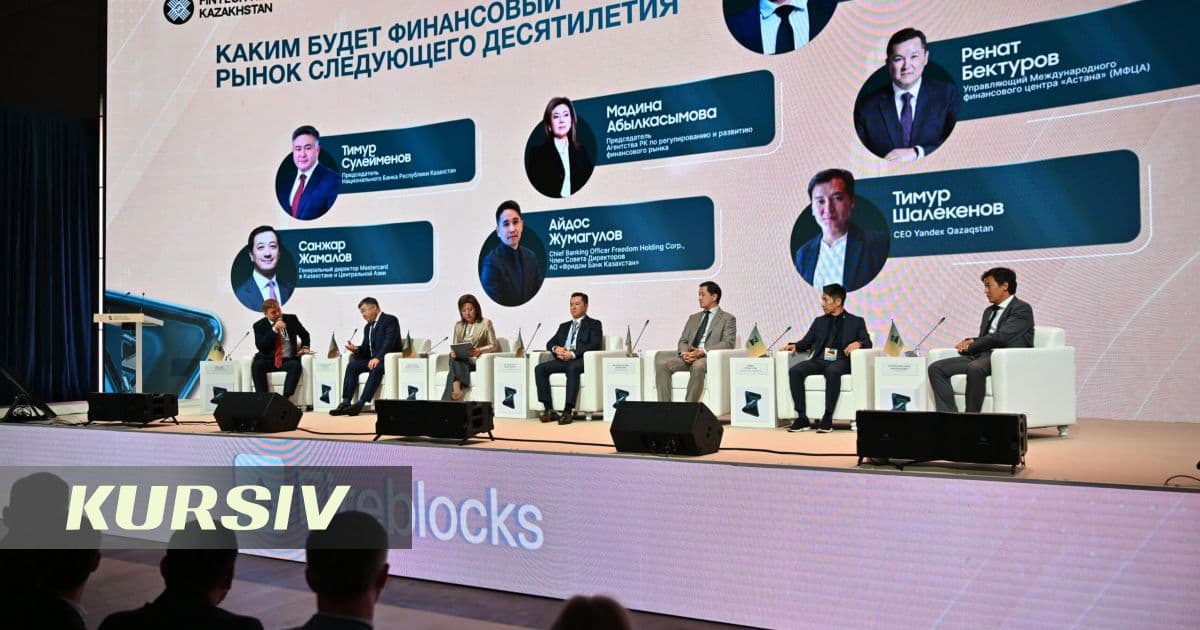
By September 1, 2026, the National Antifraud Center helped block fraudulent transactions worth 127 billion tenge. Currently, more than 270 participants are connected to the system, as reported at the Central Asia Fintech Summit 2026 in Almaty. At the summit it was noted that the Antifraud Center has become one of the main elements of the national digital financial infrastructure along with interbank payments, digital tenge and biometric identification. The results of the system’s work were summed up at the National Antifraud Awards 2026 ceremony. Digital tenge remains another area of development of financial infrastructure. In 2026-2027, the volume of transactions with it is expected to reach 2 trillion tenge. In addition, more than ten solutions based on artificial intelligence are already in commercial operation at the National Bank. The development of the digital asset market continues. 34 projects are currently being implemented in the regulatory sandbox, and $700 million has been allocated to the National Crypto Reserve. The results of the Fintech Stars Battle competition were also summed up at the summit. The main winner was the SHART RATE project, a digital platform for concluding legally binding online contracts. The startup received the opportunity to raise up to $100 thousand from White Hill Capital under the SAFE contract. The influencer marketing platform BEHYPE, led by Aigerim Beisembina, received a place in the acceleration program in Dubai from Tumar Innovation Hub. The BYTRADER startup, which is developing a trading terminal with artificial intelligence and risk management tools, received a grant of 6 million tenge from Yandex Cloud. General Director of Kazakhstan Fintech Network Dias Savetkanov noted that the competition should give startups direct access to capital and industry expertise. As part of the Central Asia Fintech Summit, we also signed memorandums with Tether and VEON on the development of joint projects in the technological and financial markets of Kazakhstan. A separate agreement was concluded by the National Payment Corporation of Kazakhstan and the payment system of Uzbekistan HUMO. The parties intend to ensure mutual acquiring of national QR codes: residents of Uzbekistan will be able to pay for goods and services in Kazakhstan through the Kazakh national QR, and Kazakhstanis will be able to use the UzQR system in Uzbekistan. In addition, it is planned to develop transfers between users of the two countries through familiar banking applications. Chairman of the Board of the National Payment Corporation Zhanar Samaeva said that the partnership should ensure the compatibility of the national payment infrastructures of the two countries. The head of HUMO, Alexander Sotnikov, called the project a step in the development of cross-border payments in the region. Earlier, Kursiv wrote that about 20 million payments have already been made through a single QR in Kazakhstan. Deputy Chairman of the National Bank Binur Zhalenov noted that 99.5% of operations were successful, and the transition of retail outlets to compatible QR codes is planned to be completed in about six months. Kursiv also reported that from October 2026, Kazakhstan will begin issuing licenses to payment organizations of the first category. They will be able to issue cards by opening
标题为英语The anti-fraud center of Kazakhstan blocked transactions worth 127 billion tenge
By September 1, 2026, the National Antifraud Center helped block fraudulent transactions worth 127 billion tenge. Currently, more than 270 participants are connected to the system, as reported at the Central Asia Fintech Summit 2026 in Almaty. At the summit it was noted that the Anti-Fraud Center became one of...
Kursiv Media Tech作者: Элина Гринштейн2026年9月11日 (9月11日)
提供 3 种语言版本AI 摘要:要点
- By September 1, 2026, the National Antifraud Center helped block fraudulent transactions worth 127 billion tenge
- Currently, more than 270 participants are connected to the system, as reported at the Central Asia Fintech Summit 2026 in Almaty
- At the summit it was noted that the Anti-Fraud Center became one of...
全文为英语
相关文章
微软称其人工智能诊断复杂疾病的准确率比医生高出两倍多。 Co...
微软称其人工智能诊断复杂疾病的准确率比医生高出两倍多。公司正准备打造医疗超级智能。发表在《科学》杂志上的研究显示,微软 MAI-DxO 系统正确识别了……
Telegram — GPT Time | Нейросети | ИИ
Education1 分钟
Twitter 的创建者展示了一个几乎可以像活人一样说话的人工智能
🎙 Twitter 的创建者展示了一个几乎可以像真人一样说话的人工智能。 Jack Dorsey 的 Block 公司推出了 Dessa,这是一种新的语音 AI 模型,能够保持自然对话,而不会出现通常的延迟。主要特点是黛莎接受过专门的培训……
Telegram — GPT Time | Нейросети | ИИ

女作家靠神经网络创作的书籍赚取100万美元
来自南非的女作家以笔名科拉尔·哈特出版,靠出售书籍赚取了超过100万美元(逾4.53亿坚戈)。她作品的特点是不手工创作,而是借助人工智能生成。《Kursiv LifeStyle》将讲述如何……
Kursiv Media Tech
Anthropic 和 Theorem 使用 Claude 对 123 个开源库进行数学验证
📌 Anthropic 和 Theorem 使用 Claude 对 123 个开源库进行数学验证 研究人员应用该模型构建代码可靠性的形式化数学证明。基础是来自 Google OSS-Fuzz 服务的现成模糊测试…
Telegram — AI Machine Learning Big Data