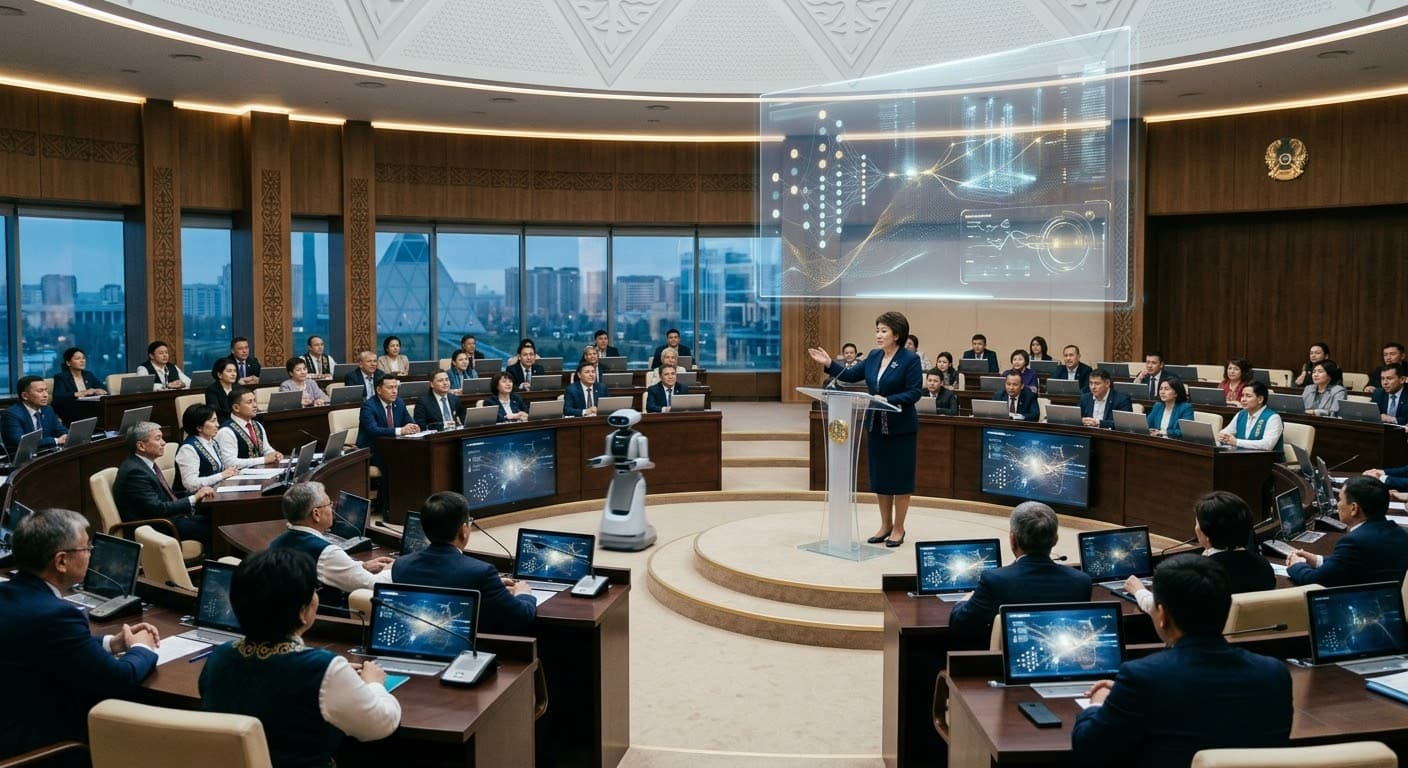
The first convocation of the unicameral Kurultai of Kazakhstan was not only a constitutional reform, but also an application for a technological experiment. President Kassym-Jomart Tokayev ordered the introduction of artificial intelligence into the legislative process, and the Adilet party, which received an absolute majority of mandates, initially built its campaign around the digital agenda. Let's figure out what's behind the numbers and instructions, Tech-news reports.
From two chambers to one: the context of reform
On March 15, 2026, a nationwide referendum was held in Kazakhstan, as a result of which a new Constitution was adopted - it came into force on July 1. One of the key changes is the abolition of the Senate and the transition from a bicameral parliament to a unicameral Kurultai.
On August 23, 2026, the first elections of deputies of the Kurultai took place. Out of 12.6 million voters, over 9.35 million people took part in the voting, the turnout was 74.08%. 545 candidates from seven parties competed for 145 deputy mandates, with a competition of about 4 people per seat.
Five parties overcame the five percent barrier, and the mandates were distributed as follows:
Party Mandate
"Justice" 110
Party «Aul» 10
Party "Respublica" 9
Democratic Party "White Way" 8
National Social Democratic Party 8
Presidential order: artificial intelligence in lawmaking
At the last joint meeting of the chambers of parliament, before giving way to the Kurultai, Tokayev outlined mechanisms that should work in the coming years: from the return of illegally acquired assets to the regulation of AI. Later, speaking to the new Kurultai, the president approached the topic more specifically.
The head of state instructed to more actively use artificial intelligence technologies directly in legislative work. On his initiative, an e-Parliament information system is being developed, which should combine digital lawmaking tools into a single platform and ensure preventive identification of legal risks, that is, the system should “at the input” find contradictions and gaps in bills even before their adoption.
State bodies, together with deputies, have been instructed to introduce the platform into the work of the Kurultai as soon as possible. The President separately emphasized that bureaucratic delays and negligence in this matter are unacceptable, and bills of strategic importance require mandatory examination with the involvement of the specialized community.
“Adilet”: a digital party by its own definition
The focus on AI in the work of the Kurultai coincided (and was largely set) by the election program of the Adilet party - “Adiletti Bolashak Ushin”. A separate section is devoted to digitalization and artificial intelligence, and the party list includes IT specialists. Key points of the digital block of the program:
Training 5 million Kazakhstanis in artificial intelligence skills over five years;
Creation of AI Hub - a competence center for the development of the AI industry;
Automation of up to 30% of standard processes in the government apparatus;
Development of “hearing state” services - modernization of eGo