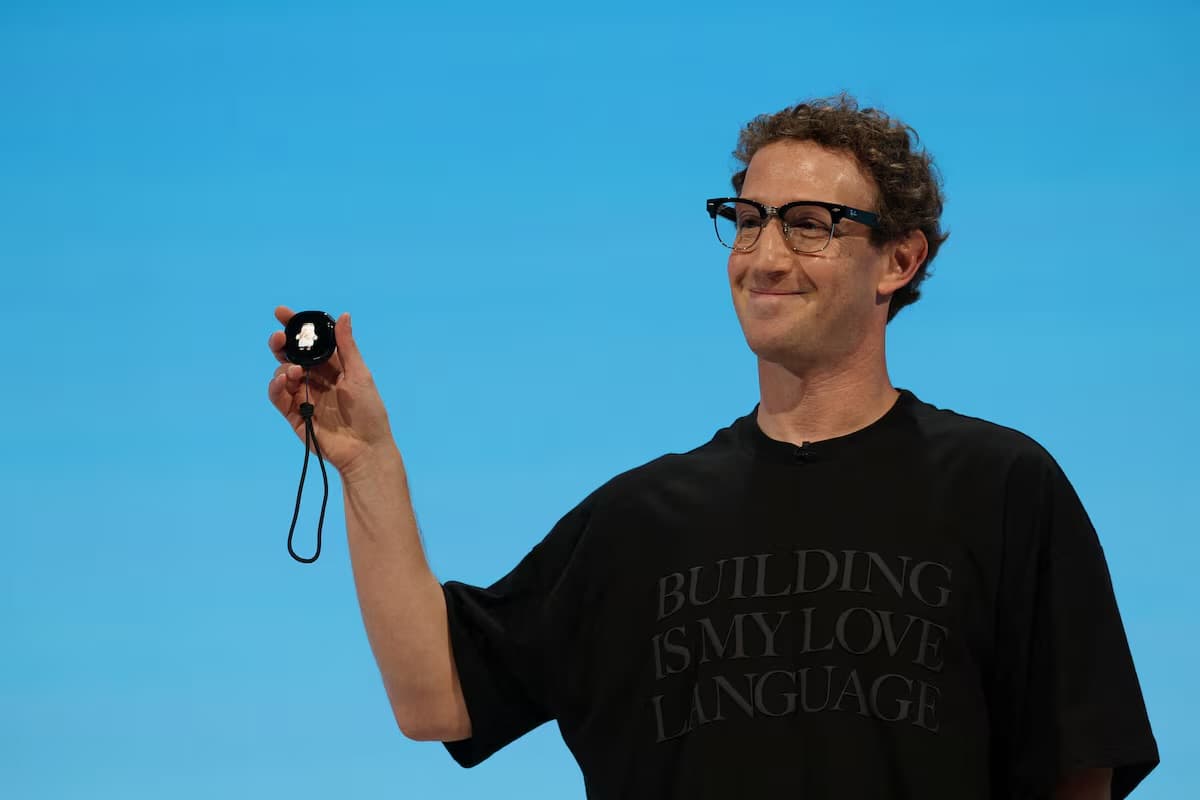
Meta is gearing up to bring AI to the personal device, reducing reliance on smartphone apps. The company unveiled a small pocket watch-like gadget called the Muse Charm at the Meta Connect conference, Tech-news reports with reference to Reuters. The main purpose of the device is to directly access the company's Muse AI system without opening the app on the smartphone. Muse Charm is equipped with a screen of about 2 inches. The screen can be controlled with the thumb, and in the center is a user-customizable Muse character. The device is equipped with a 5G modem, so it can use Muse without connecting to Wi-Fi. However, the gadget is not intended for calling. Meta CEO Mark Zuckerberg noted that the company's focus on AI has changed. Previously, Meta saw the metaverse as the next major computing platform, but now the company is pushing the idea of "personal superintelligence" to the fore. According to Zuckerberg, Meta will focus on creating devices adapted to this direction in the future. The Muse system will also be included in the company's smart glasses. For Meta, this is not just a new gadget release, but a way to reduce dependence on smartphone operating systems. Today, the majority of mobile AI services are distributed through Apple and Google platforms. And the personal device allows Meta to directly control the communication between the user and the AI. Another feature of the new gadget is its design. According to experts, a personal AI device with a small screen could resemble digital characters like Tamagochi. Such a format is likely to be particularly interesting to a younger audience who perceive AI as a daily companion rather than a search tool. For Meta, competition is high in this market. While personal AI devices such as the Rabbit R1 have attracted a lot of interest before, questions have arisen regarding their capabilities and actual use cases. Therefore, the future of the Muse Charm will depend on what specific tasks it solves that a smartphone, smartwatch, headphones or smart glasses cannot. It is not yet known when the device will hit the mass market.
From the original source:
Tech-news.kz
Read full article at Tech-news.kzThis material was compiled from public sources. If its publication affects your rights → Request removal
Meta AI-ға арналған жаңа құрылғыны таныстырды
Meta AI-ға арналған жаңа құрылғыны таныстырды.
AI Summary & Key Takeaways
- Meta AI-ға арналған жаңа құрылғыны таныстырды.
Related stories

Ex-Nvidia-turned-VC Amulya Vishwanath: ‘Physical AI is in it’s LEGO era’
It’s the moment everyone is waiting for — the ChatGPT moment for robotics, Amulya Vishwanath explained to TechCrunch’s Equity.
FairStress: A deeper evaluation of fairness in LLM decision-making
A Blog post by Ai2 on Hugging Face

The new economics of enterprise AI
Imagine your company just discovered electricity. At first only a few machines run on it, and nobody worries about efficiency — consumption is low and the value is obvious. But once electricity becomes infrastructure, every process depends on it, and the question changes from…
RUГлава NVIDIA Дженсен Хуанг приедет в Казахстан 23 октября
💎 Глава NVIDIA Дженсен Хуанг приедет в Казахстан 23 октября 23 октября в Астане состоится встреча основателя и генерального директора NVIDIA Дженсена Хуанга с заместителем премьер-министра — министром искусственного интеллекта и цифрового развития Казахстана Жасланом Мадиевым.…